
Description:
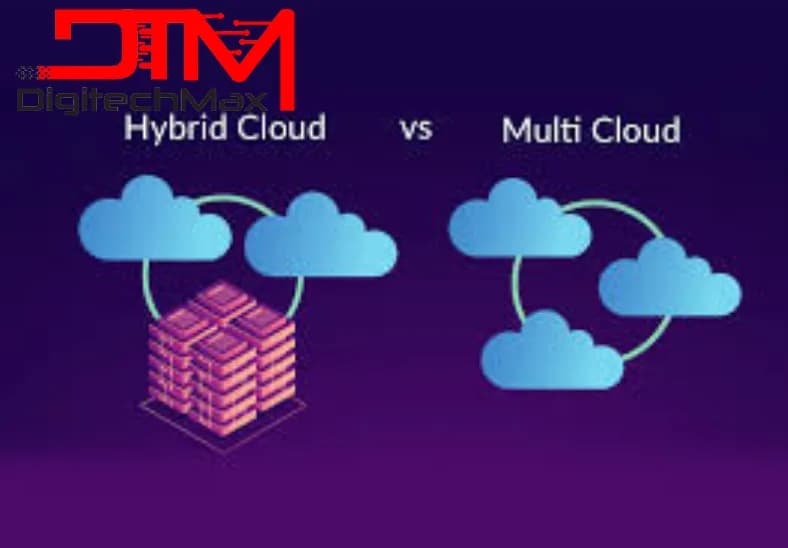
A Hybrid Cloud integrates private (on-premise) and public cloud environments, allowing companies to secure sensitive data while leveraging the scalability of public clouds. This model is ideal for industries with strict compliance or security requirements.
Meanwhile, a multi-cloud strategy involves using multiple public cloud providers — such as AWS, Google Cloud, and Microsoft Azure — to avoid vendor lock-in and optimize workloads across different platforms. It gives organizations the agility to select the best tools and pricing for each task.
Key Points:
1. Hybrid Cloud – Best for Control and Security
- Combines private and public clouds for flexibility and safety.
- Ensures data protection for sensitive or regulated industries.
- Allows gradual cloud adoption while maintaining on-premise systems.
2. Multi-Cloud – Best for Agility and Freedom
- Uses multiple public cloud platforms simultaneously.
- Avoids vendor dependency and pricing constraints.
- Optimizes workloads and performance across providers.
3. Benefits of Hybrid Cloud
- High-level security and compliance.
- Seamless integration between systems.
- Cost-effective scalability.
4. Benefits of multi-cloud
- Freedom to choose the best platform for each use case.
- Improved uptime and business continuity.
- Faster innovation and deployment.
5. Choosing the Right Approach
- Go Hybrid Cloud for data-sensitive industries and compliance needs.
- Choose Multi-Cloud for flexibility, cost optimization, and rapid growth.
- Many modern enterprises adopt a hybrid-to-multi-cloud evolution strategy to scale smarter.
Conclusion:
Empower your business with the right cloud strategy — Hybrid for control, multi-cloud for freedom, and a mix for the future of digital success.